
Acceptance grew, but permission stayed conditional
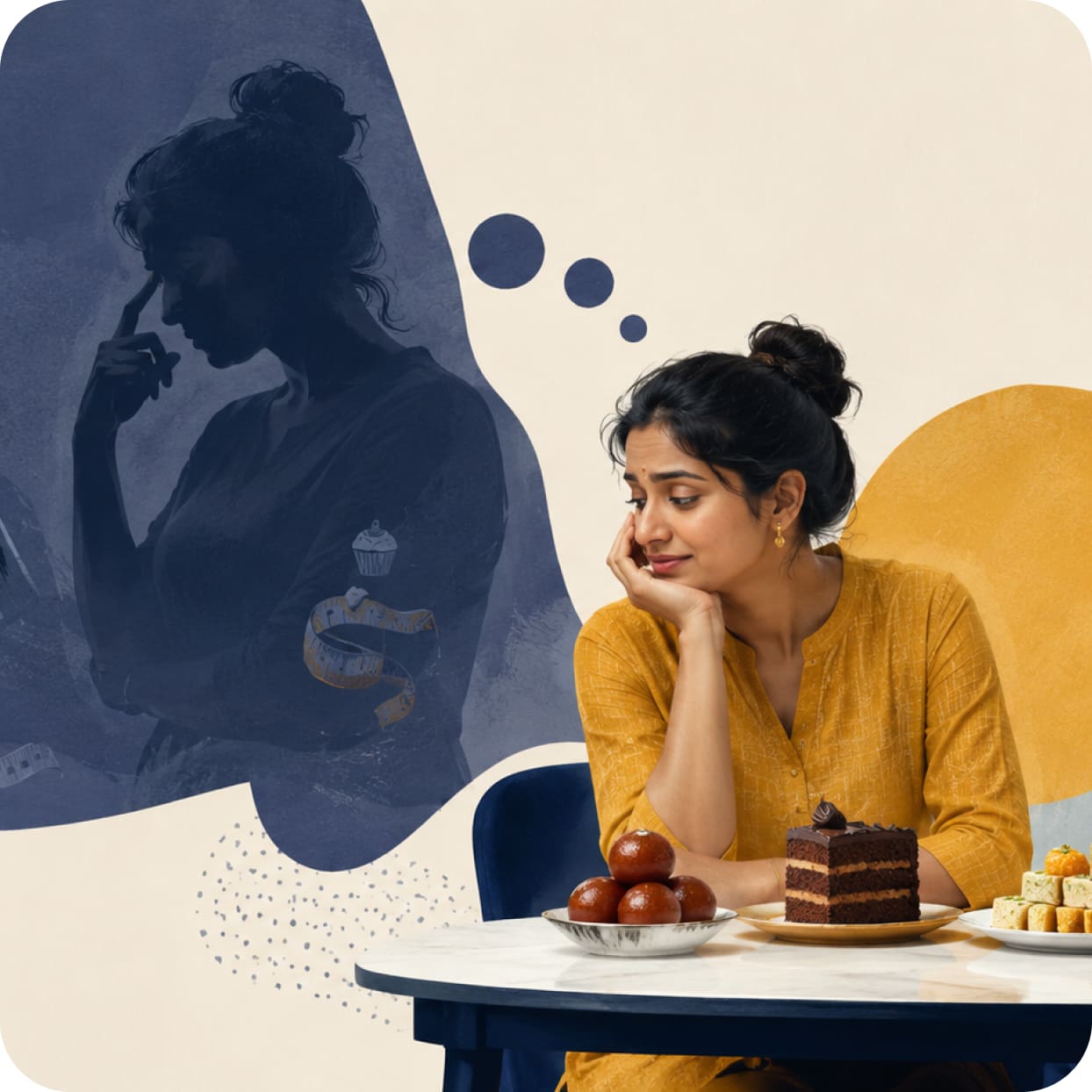
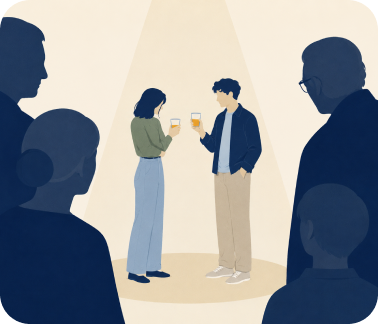
Drinking became more visible and socially acceptable, but consumers still edited behaviour depending on who was watching, especially around family, elders and non-metro contexts.
A consumer decode of how beer, wine, whisky and white spirits signal mood, status, personality and belonging.
As alcohol became more visible and culturally mainstream, the category needed a sharper way to understand young consumers beyond simple drink preference.
A category culture and occasion-mapping study that uncovered how different alcohol formats performed different emotional, social and identity jobs in consumers’ lives.
Mumbai, Bangalore, Delhi NCR, Pune, Jaipur and Vizag
Frequent consumers of beer, wine, white spirits and dark spirits, across men and women aged 21 to 35 years
Segmentation, Category needs and consumption occasions study
Alcoholic Beverages
Drinking became more visible and socially acceptable, but consumers still edited behaviour depending on who was watching, especially around family, elders and non-metro contexts.
Pop culture, peers, family exposure and youth symbolism built desire long before actual trial. The first drink was often about curiosity, FOMO, peer pressure or feeling grown-up.
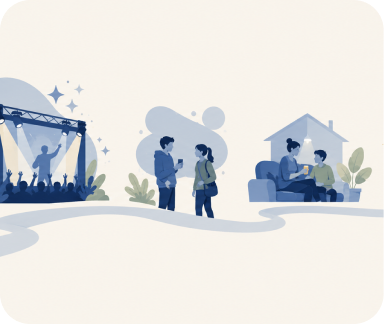
Moments were defined less by place and more by what consumers wanted alcohol to do: loosen them up, make them belong, elevate romance, signal success, extend fun or help them unwind.
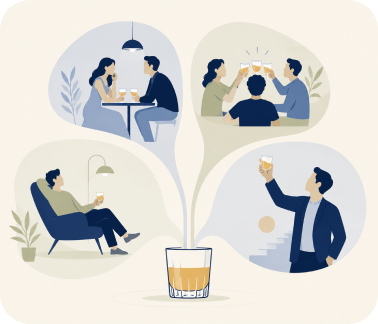
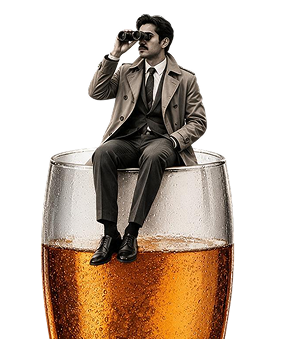
Beer worked as an easy, low-pressure entry point into the alcohol category because it felt casual, controllable, affordable and less intimidating than hard liquor.
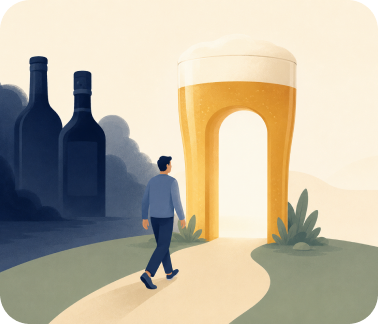
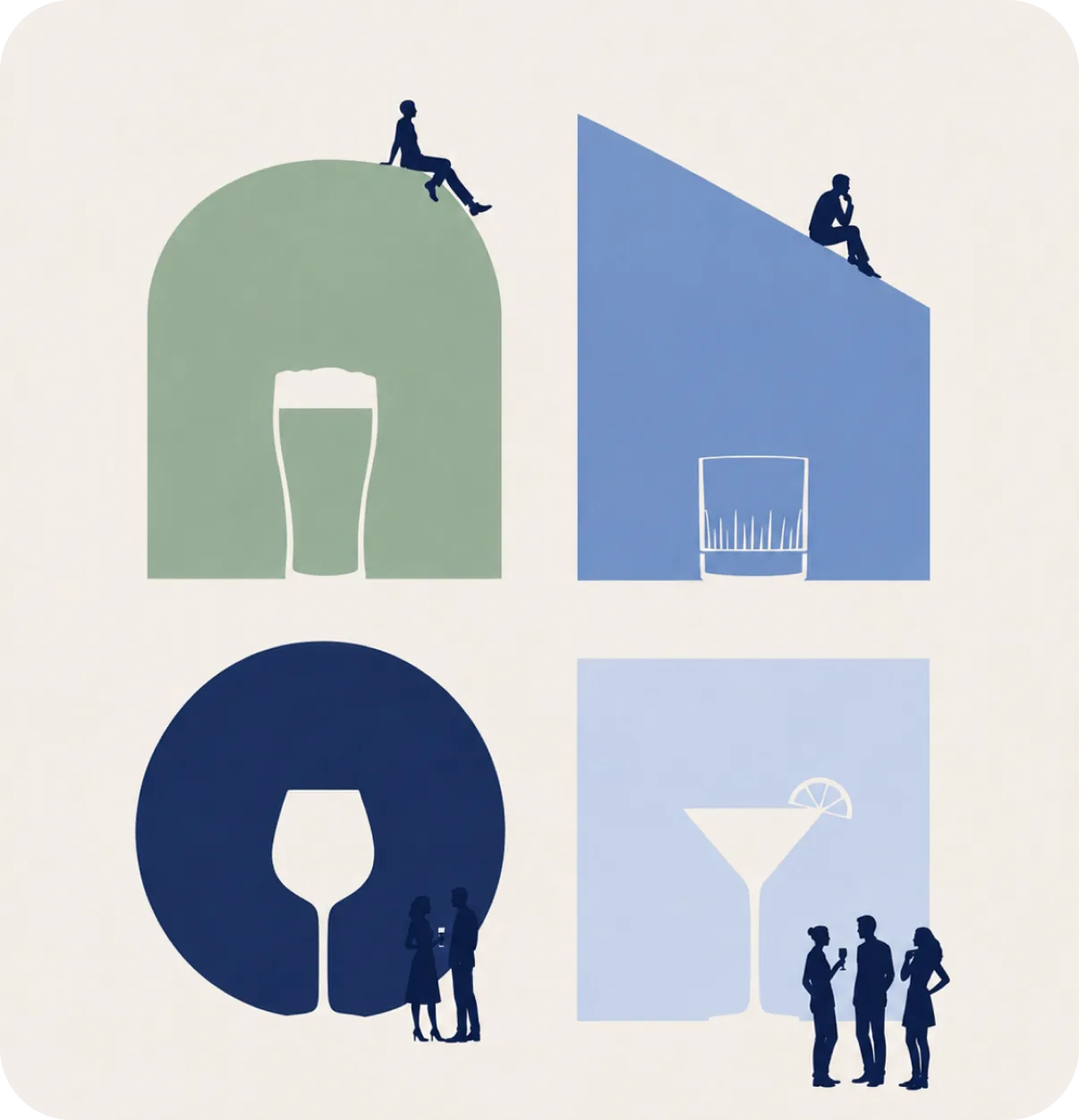
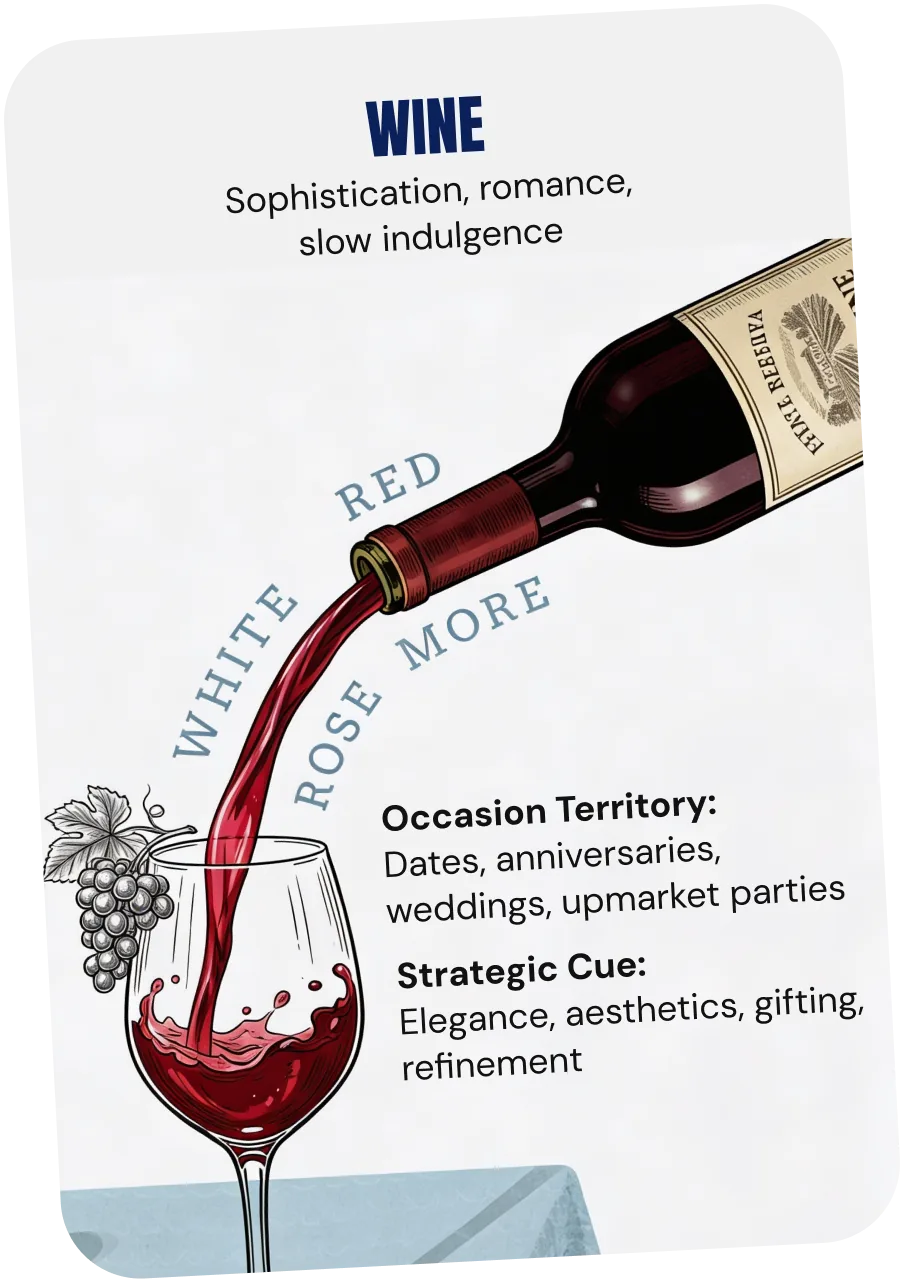
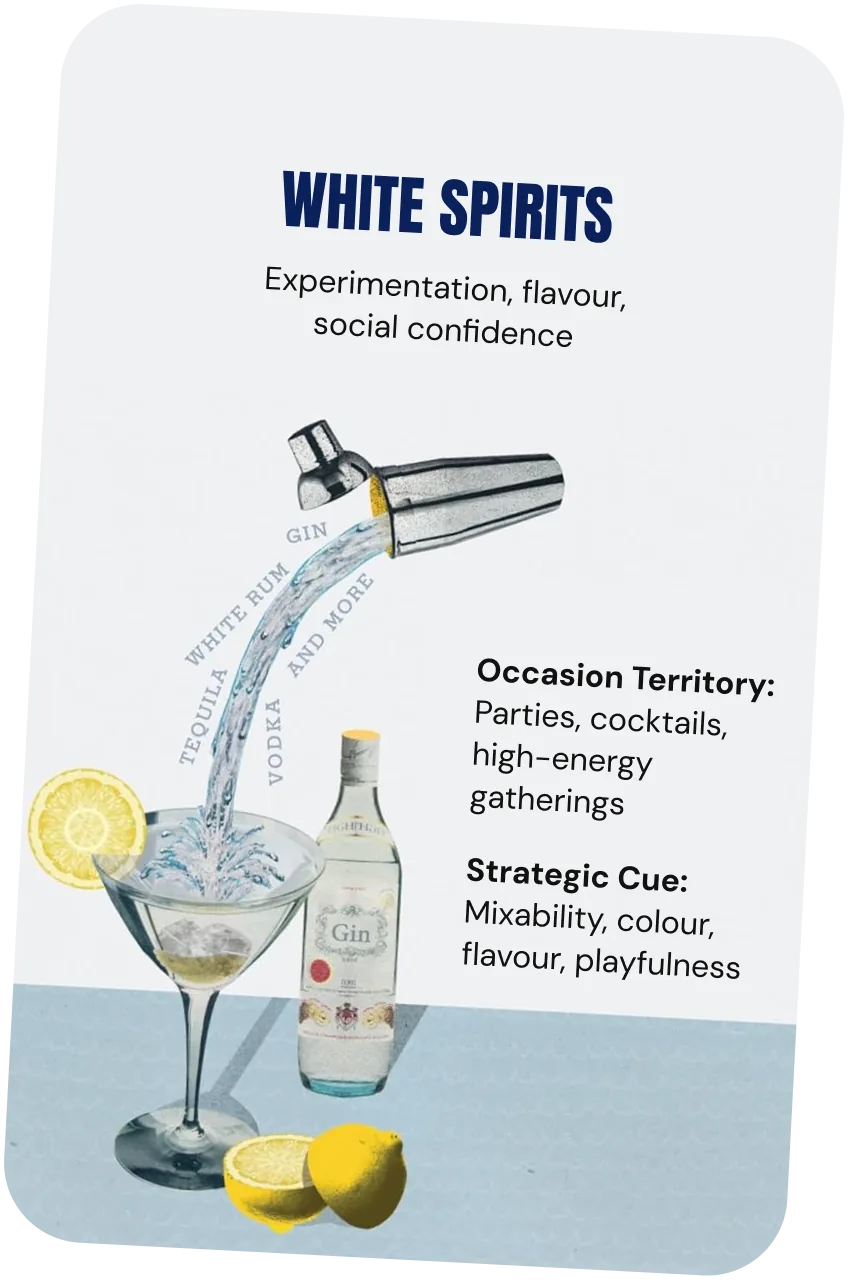
Each format carried its own self-image code: beer for belonging, dark spirits for maturity, wine for sophistication and white spirits for energy.
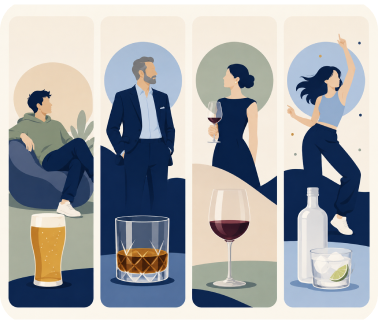
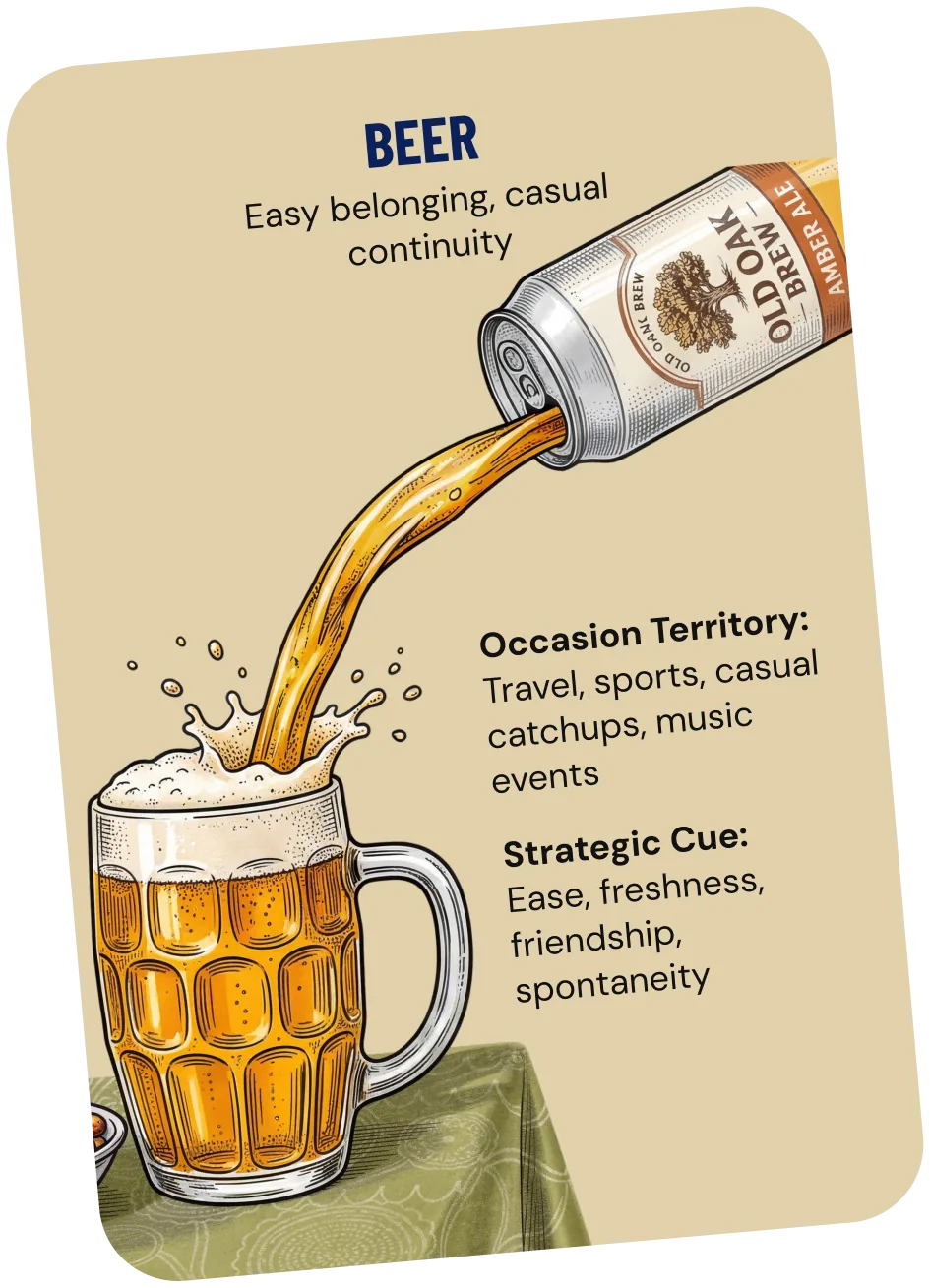
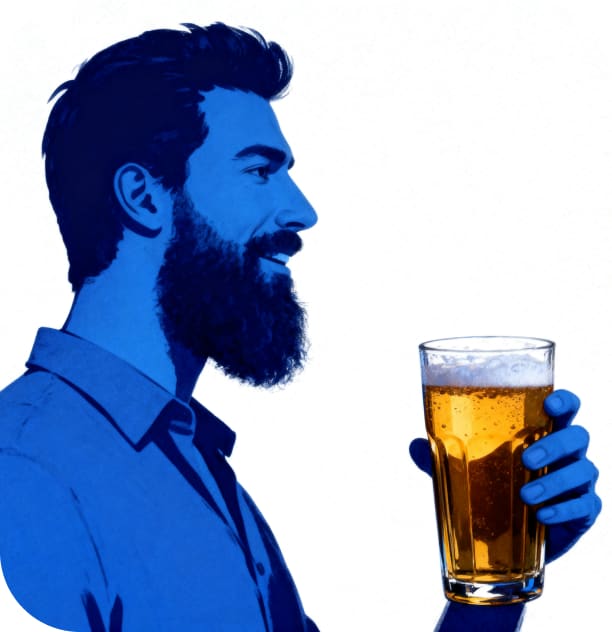
Chooses beer to keep moments easy, casual, social and going for longer.
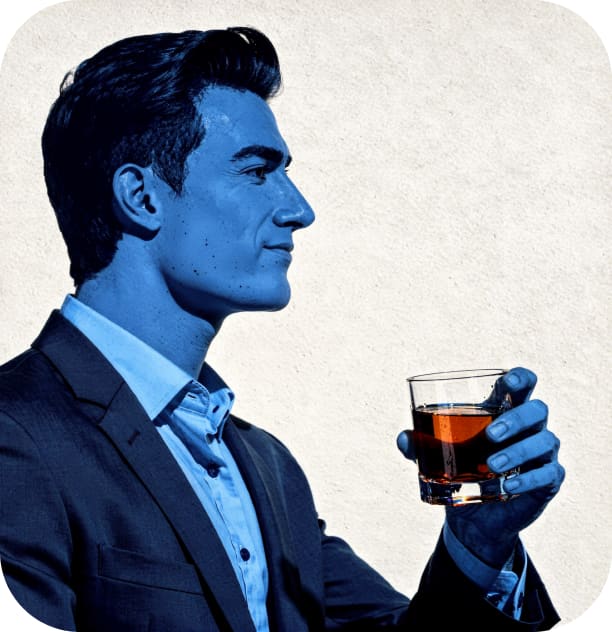
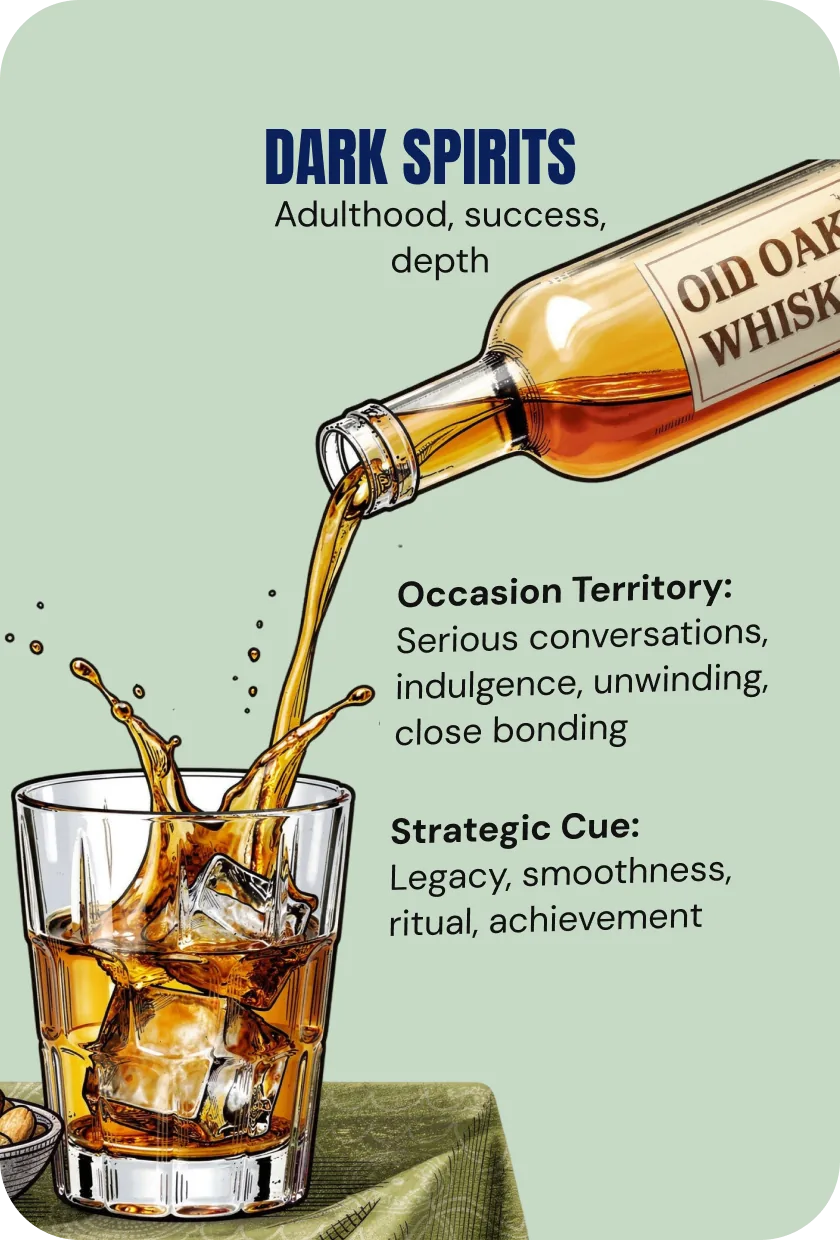
Uses whiskey, rum or brandy to signal adulthood, success, depth and serious bonding.
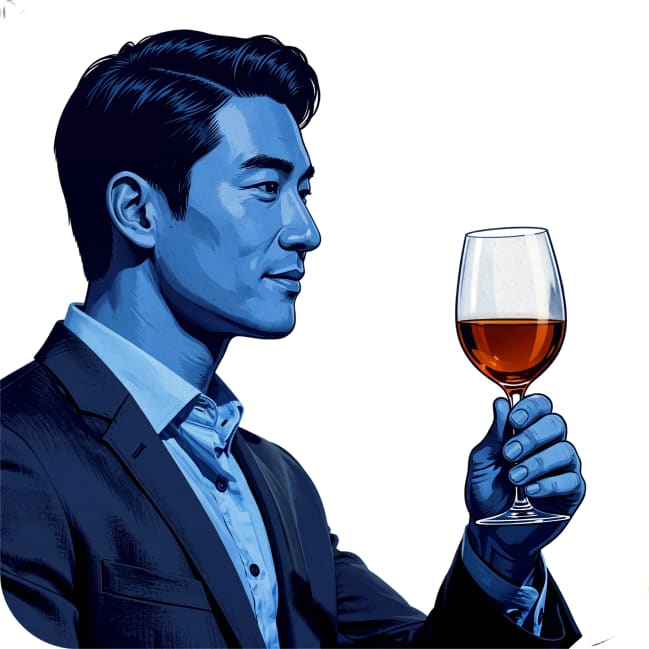
Uses wine to make dates, celebrations and gatherings feel more refined, romantic and special.
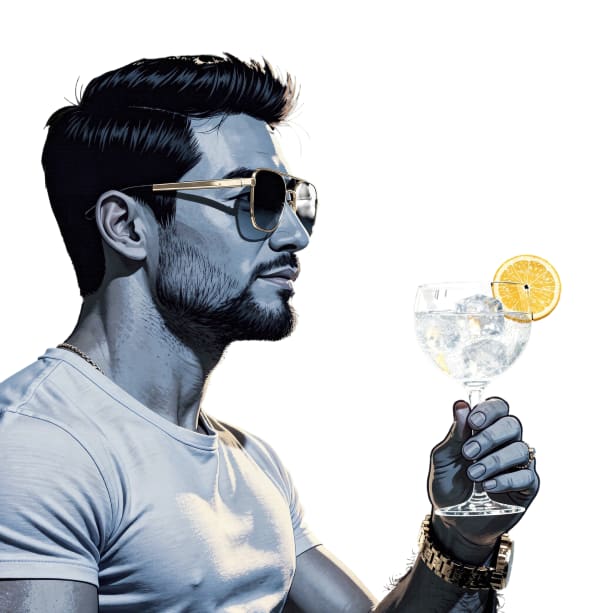
Leans on vodka, gin or white rum for flavour, experimentation, confidence and high-energy socialising.
Consumers shift drinks by mood, company and context, so segmentation should be built around emotional jobs, not just beverage type.
Beer should own ease, dark spirits maturity, wine refinement and white spirits energy.
Consumers still manage judgement, visibility and control, creating space for low-risk, socially comfortable formats.
Metro and non-metro consumers differ in openness, family visibility and drinking confidence.
The opportunity lies in becoming the drink for the road trip, the date, the party, the serious conversation or the unwind moment.