
 Cities
Delhi, Mumbai, Bangalore, Chennai, Hyderabad, Amritsar and Kolkata
Aviation
A diagnostic study of how a legacy airline is perceived, preferred, and positioned in the mind of the frequent flyer.
The airline carried strong awareness, legacy and familiarity across international markets, but evolving expectations around reliability, comfort, hospitality and service recovery were reshaping what travellers needed from the brand to remain relevant and preferred.

A cross-study brand health and preference diagnostic examining how brand meaning was formed through airline choice, long-haul travel, connecting journeys, full-service experiences, loyalty and post-journey memories.
 Cities
Delhi, Mumbai, Bangalore, Chennai, Hyderabad, Amritsar and Kolkata
 Consumers
Frequent international flyers, business and leisure travellers, families, senior citizens, students and frequent-flyer programme members
 Study type
Cross-study airline brand, preference and experience diagnostic
 Category
Aviation
Reforms and visible modernisation generated hope, particularly among consumers with existing cultural affection for the airline. However, consumers still struggled to identify a contemporary and distinctive reason to choose it over global full-service competitors, and optimism required repeated proof through the actual experience.
Punctuality, baggage handling, communication, staff responsiveness and disruption support determined whether the airline felt dependable enough to choose for an international, full-service journey.
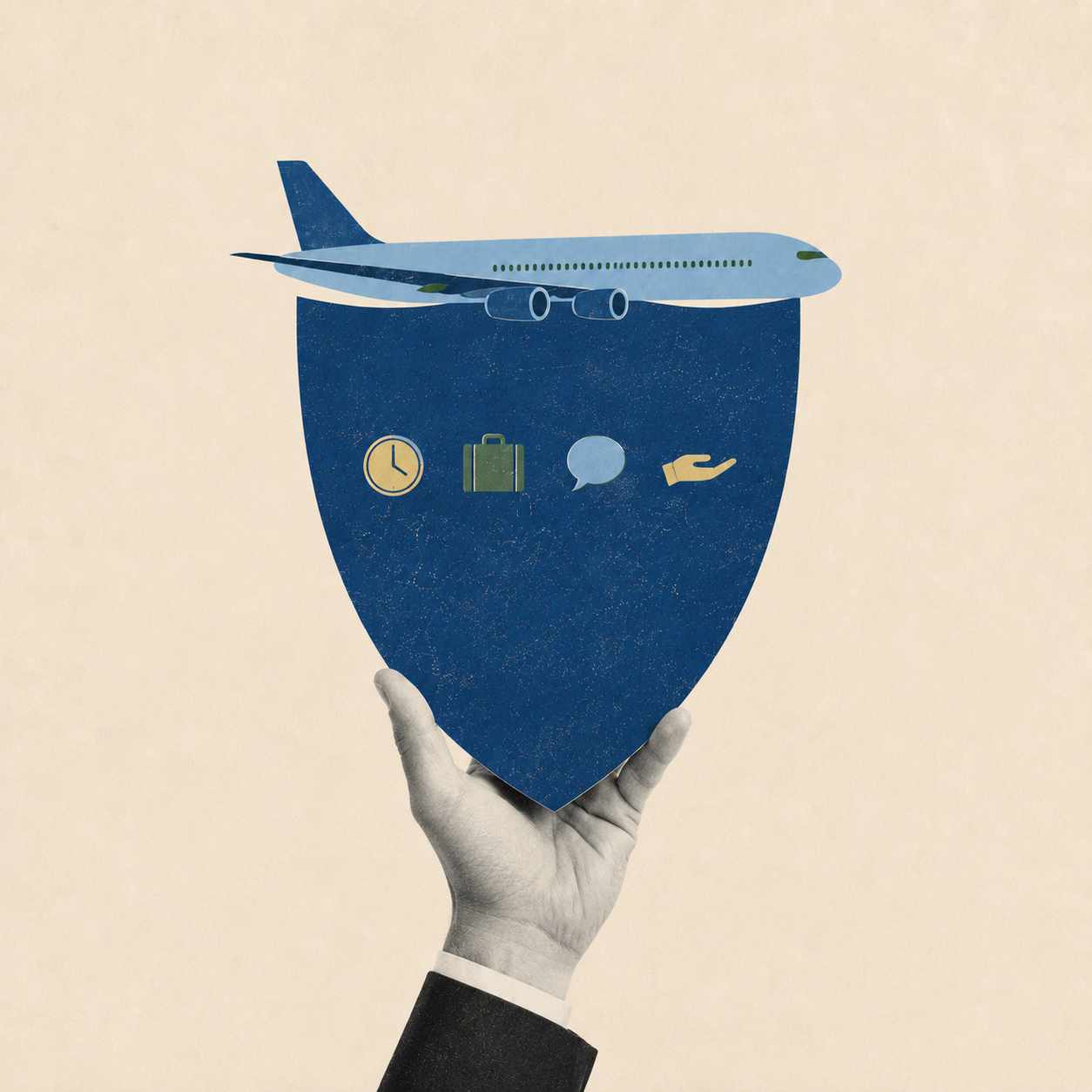
Direct routes, schedules, baggage allowance, familiar meals, language comfort and competitive fares helped the airline enter the shortlist. Final choice depended on whether the complete experience felt predictable, dependable and worth the price.

Experiences varied across aircraft, routes, cabins, crew and airport touchpoints. Positive experiences were often seen as isolated exceptions, while each new booking continued to feel like a fresh risk assessment.

Global full-service competitors converted consistency into peace of mind, proactive communication into reassurance, attentive service into care, and effective disruption handling into trust and respect.

Travellers carried a pre-existing set of airlines in their minds, with each brand assigned a role based on experience, peer narratives and perceived reliability.



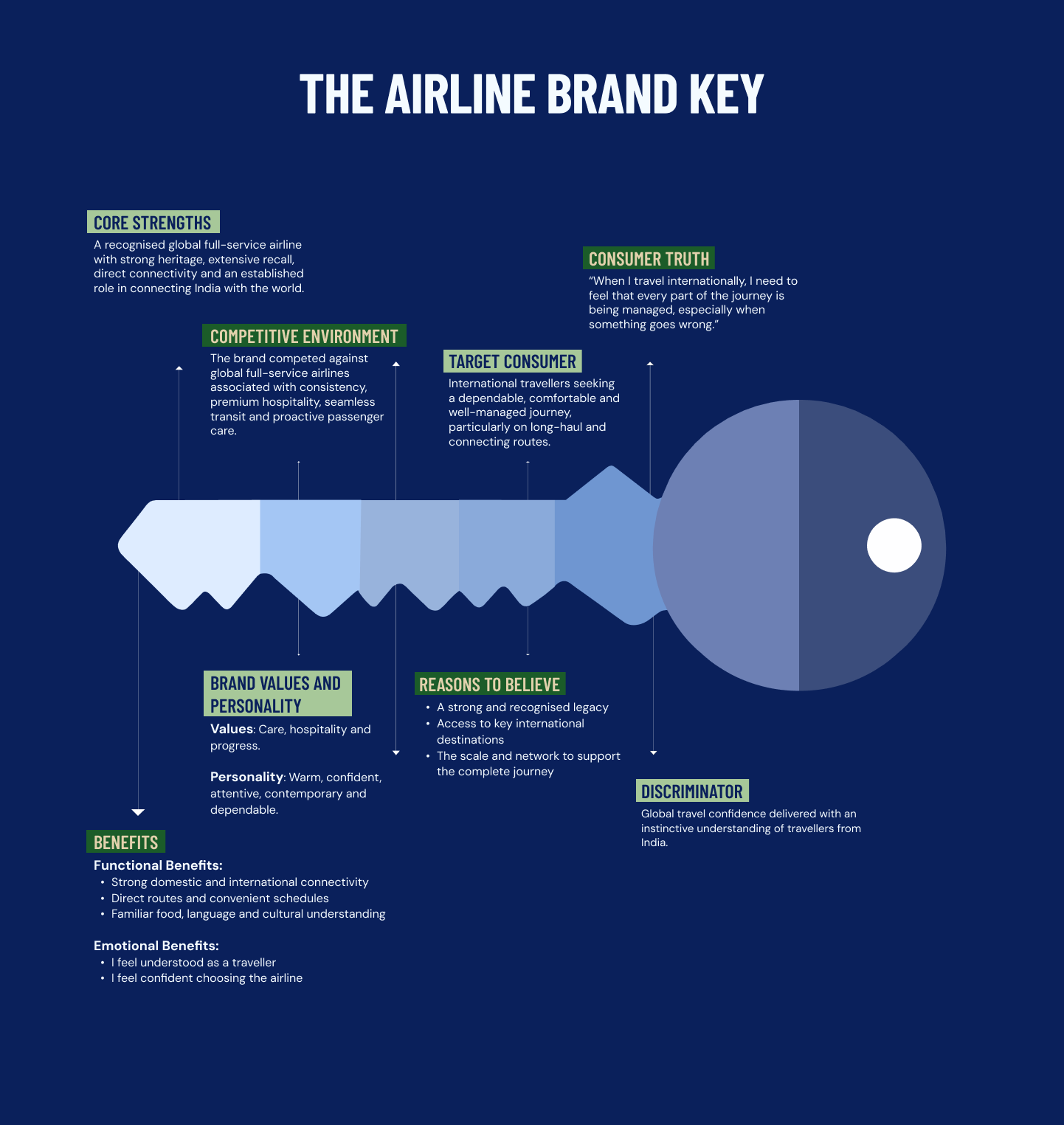

A recognised global full-service airline with strong heritage, extensive recall, direct connectivity and an established role in connecting India with the world.
“When I travel internationally, I need to feel that every part of the journey is being managed, especially when something goes wrong.”
The brand competed against global full-service airlines associated with consistency, premium hospitality, seamless transit and proactive passenger care.
International travellers seeking a dependable, comfortable and well-managed journey, particularly on long-haul and connecting routes.
Functional Benefits:
Emotional Benefits:
Values: Care, hospitality and progress.
Personality: Warm, confident, attentive, contemporary and dependable.
Global travel confidence delivered with an instinctive understanding of travellers from India.
Operational dependability should form the foundation of the brand promise. Communication, service, comfort and premiumisation become more credible when consumers trust the airline to execute the journey consistently.
The brand should feel recognisable across aircraft, cabins, routes, crew interactions, airports, digital platforms and service channels. Clear minimum standards would ensure that individual experiences reinforce one coherent global full-service brand meaning.
Direct routes offer more than shorter travel time. They reduce uncertainty, unfamiliar transfers, baggage anxiety and the burden of managing elderly relatives or children. Communication should translate network strength into control, reassurance and mental ease.
Delays and disruptions provide highly visible opportunities to demonstrate accountability. Proactive updates, clear ownership, rapid alternatives and thoughtful care can convert a difficult situation into proof that the airline protects its passengers.